What Happens when you convert a NAN to uint in Golang
This blog describes the result of converting a NAN to Uint in Golang
 Saksham Arya
Introduction
Have you ever wondered what happens when you convert a NAN in Golang to an uint64? I always assumed it would be a big garbage value or 0, but after debugging a production bug for 1 day occuring seeming randomly, I found out the result is suprising.
The Program
Let’s take a simple program in golang which, just outputs this value using Printf:
package main

import "fmt"

func main() {
	a := 0.0
	b := 0.0
	fmt.Printf("The result is: %d\n", uint64(a/b))
}
Output
On my laptop:
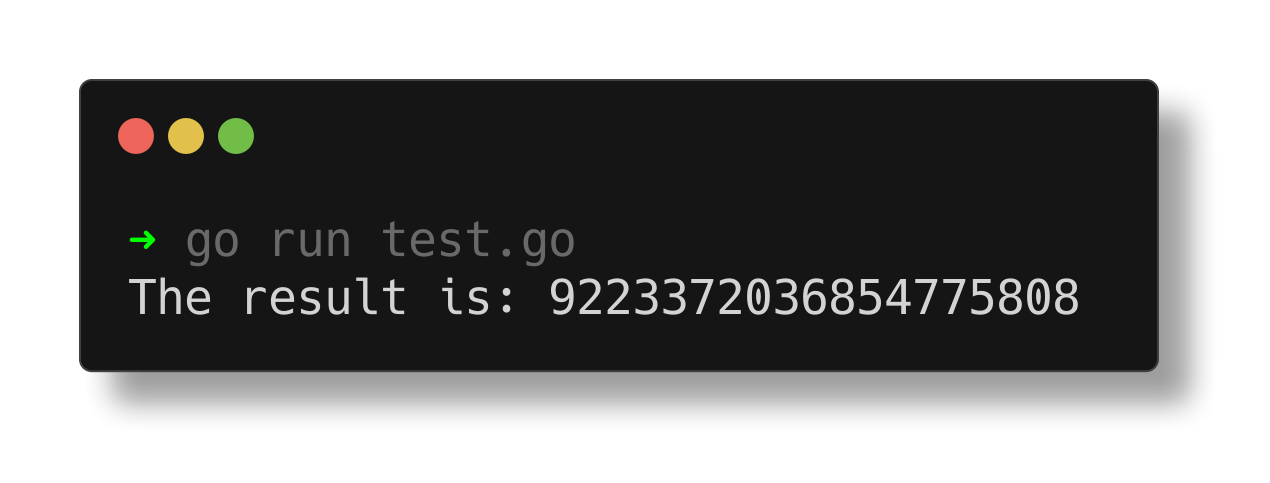
This output seems to confirm my assumption of a large garbage value. Let’s try to run this again in a vm.
I am using QEMU for creating the VM, following this guide from Redhat.
And the output is:

WAIT, WHAT?
Explanation
As some people may have guessed, the difference between the two machines is CPU architure. My laptop runs on x86 while the vm runs on ARM64.
I found this excellent stack overflow which explains the difference. Essentially, Golang just runs the hardware instruction required for converting NAN to uint and the value is depended on the CPU architecture. On x86, CVTTSD2SI is run which raises an exception which is masked by golang due to which 0x8000000000000000 (i.e. 9223372036854775808) is returned. On Arm64, FCVTZS is run which returns 0 for NAN.
How do other languages fare?
I tried the same with C++ and Rust, to see if they also show the same behaviour,
C++
The program:
#include <cstdint>
#include <cstdio>

int main () {
    double a, b = 0;
    printf("The value is: %d\n", (uint64_t)(a/b));
    return 0;
}
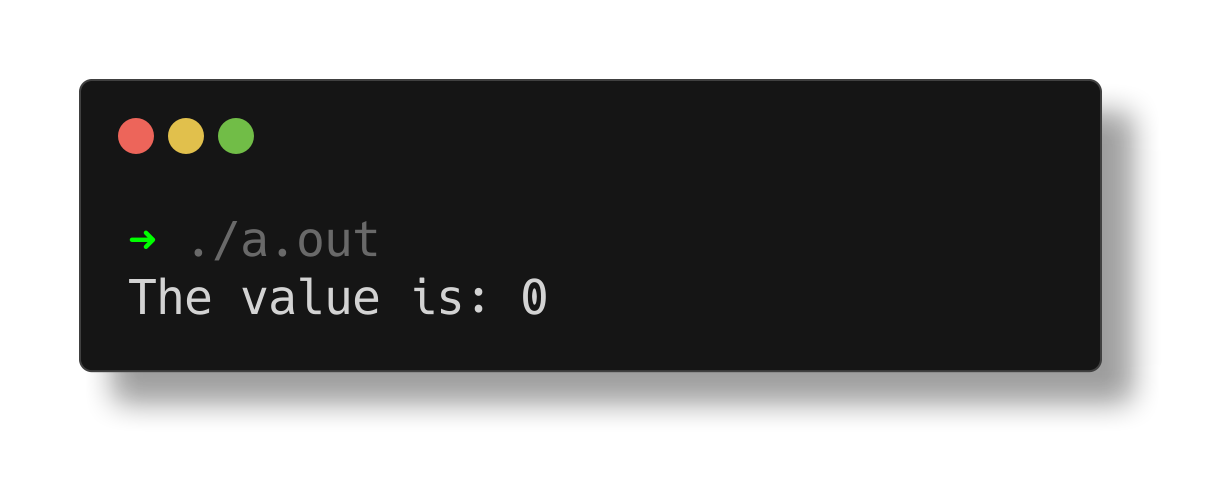
Output on my laptop:
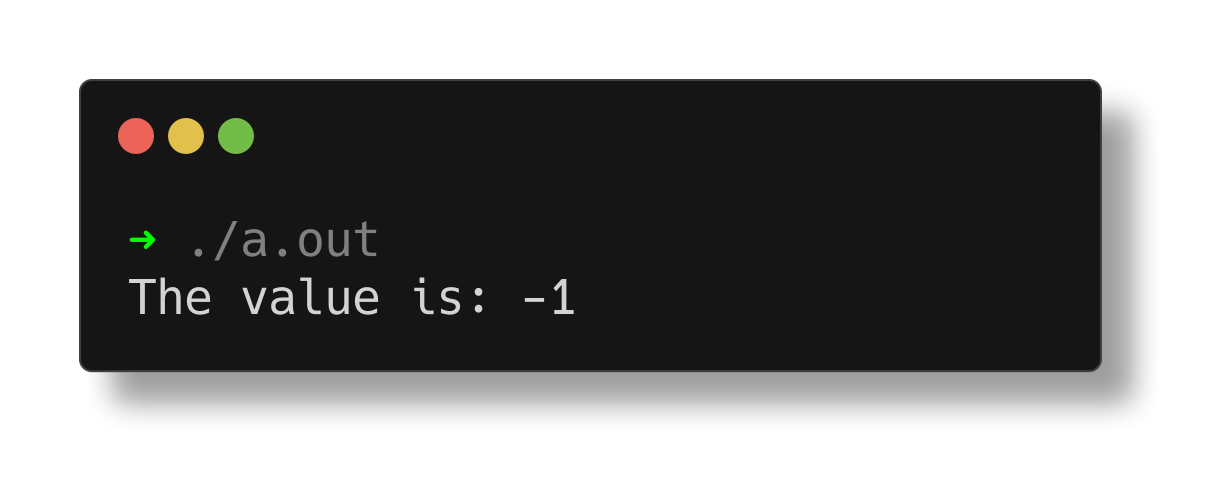
Output on VM:
Rust
The program:
fn main() {
    let a: f64 = 0.0;
    let b: f64 = 0.0;
    let c = (a/b) as u64;
    println!("The Value is: {}", c);
}
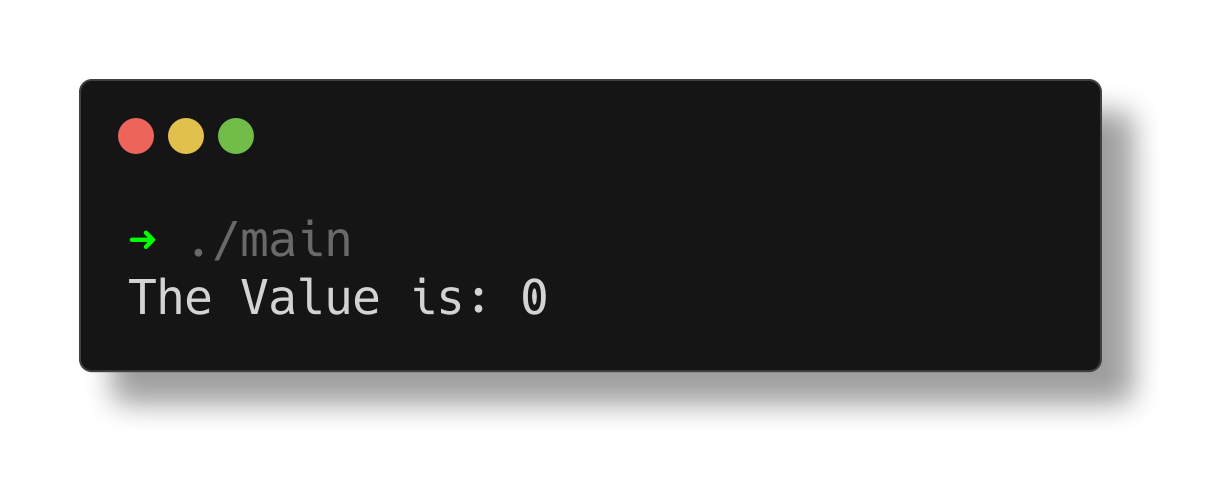
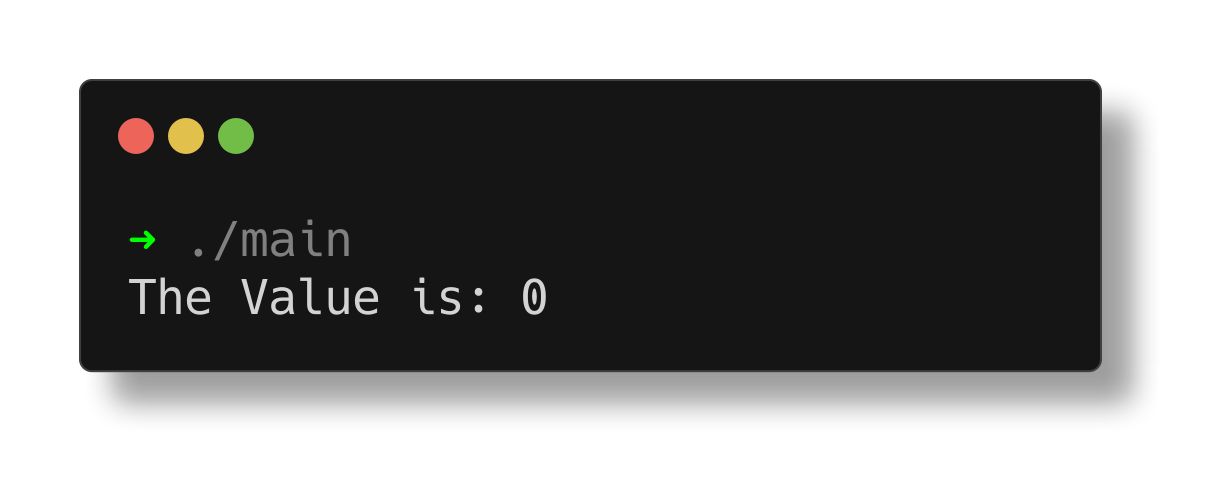
Output on my laptop:
Output on VM:
Final Thoughts
Only rust shows same output on both platforms, while cpp and golang have different output. This is the first time i noticed the output of a golang program changing based on the underlying CPU architecture.
I find this very suprising given the focus of Simplicity in GO but NAN checks may not be there due to performance reasons. We should always avoid NAN value in our code as this can lead to undefined behaviour.
If there are any more platform dependent things in golang please feel free to share them in the comments.